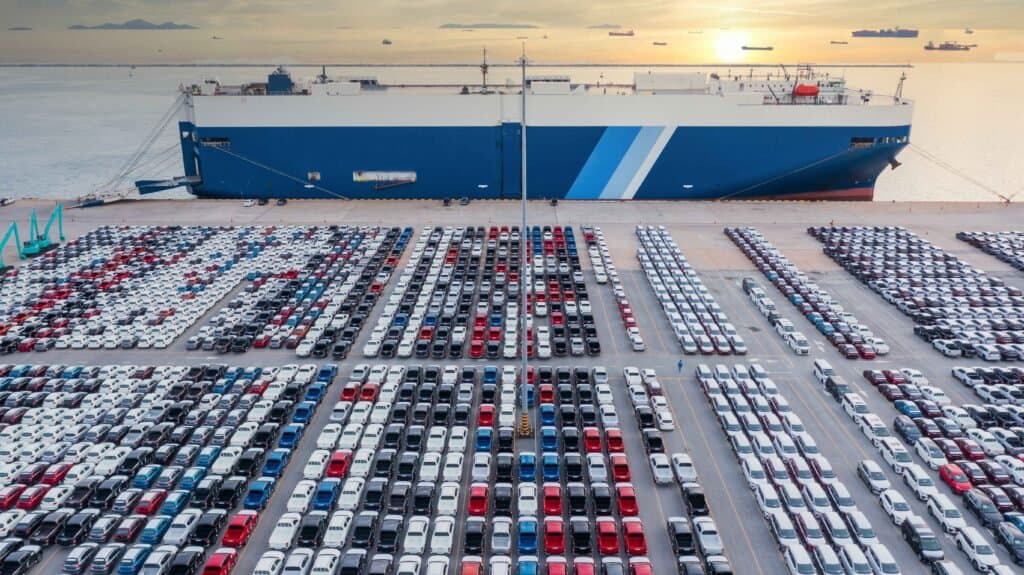
Understand RoRo vs. container shipping, FOB vs. CIF pricing, transit routes from China, and how to prepare for customs clearance at your destination port.
The right shipping method depends on vehicle condition, destination port capabilities, quantity, and buyer cost preference. Carvia's certified exporters can advise on the best option for each order.
RoRo (Roll-on/Roll-off): vehicles drive on and off the vessel. Cost-effective for standard passenger vehicles to ports with RoRo facilities. Transit time varies by route, typically 15–35 days from South China ports.
Container shipping: vehicle is secured inside a 20ft or 40ft container. Better for high-value vehicles, non-running vehicles, or destinations without RoRo capability. Allows multiple vehicles per container for volume savings.
Rail freight (China–Central Asia): cost-effective option for destinations on China–Europe rail corridors, including Kazakhstan, Uzbekistan, and beyond via Khorgos or Erenhot.
Road transport: used for cross-border delivery to landlocked markets in Southeast Asia and Central Asia where inland routes are more practical than ocean freight.
Incoterms
FOB, CIF, and what they mean for buyers
Incoterms define where seller responsibility ends and buyer responsibility begins. Choosing the right Incoterms affects total landed cost, insurance coverage, and who handles freight booking.
Most common for experienced buyers
FOB — Free on Board
The certified exporter loads the vehicle onto the vessel at the named Chinese port. The buyer is responsible for freight, insurance, and destination-side costs from that point. Gives buyers control over shipping partners and insurance.
All-in quote to destination port
CIF — Cost, Insurance, Freight
The certified exporter covers freight and marine insurance to the named destination port. Buyers pay customs duties, inland delivery, and local registration after arrival. Simplest option for buyers new to China vehicle import.
Freight included, insurance separate
CFR — Cost and Freight
Like CIF, but the buyer arranges their own cargo insurance. Common where buyers have established insurance relationships or want to control policy terms.
Delivered to buyer's location
DAP / DDP
Exporter delivers to named destination, with DDP including duties paid. Less common for vehicle export but available from some certified exporters for specific markets.
Destination admissibility
Know your destination market import rules
China vehicle export compliance is only half the picture. Destination-country import rules — vehicle age limits, emissions standards, steering-side requirements, and EV-specific authorization — determine whether a vehicle can actually be registered and operated after arrival.
Vehicle age limits: many markets cap imports at vehicles under 5 years (some under 3 or 8). Always confirm local rules before finalizing a purchase.
Emissions standards: Euro 4, Euro 5, or local equivalents may be required. Carvia's compliance gate checks destination emission standards against the vehicle's specification.
Steering side: most global markets require LHD (left-hand drive). RHD vehicles are generally restricted to the UK, Japan, Australia, and a small number of other markets.
EV and PHEV requirements: some destination markets require OEM authorization letters for battery electric vehicles before customs clearance.